Richmond & Fort Bend County, Texas
Trust, credibility, consistency and connection. We put local businesses in front of the households around them — on the neighborhood website and in the mailbox — and give churches a place where their people genuinely connect.
Each neighborhood gets its own community site — school news, events, HOA and trash schedules, homes for sale. You get the front-page Spotlight, a written article about your business, and a place in the weekly newsletter.
A 9×12 postcard reaches all 5,000 homes in the target ZIP codes. It can't be skipped, blocked or scrolled past. And because it carries fifteen different businesses, somebody in the house always needs one of them — so it gets kept instead of tossed.
Your website is for strangers. Your CRM is for staff. The Church Hub is where the congregation actually lives — praying, cooking, lending and organizing, and then carrying that out into the neighborhood.
What we do
Make a local business the one its own community recognizes and recommends — and make it affordable enough that a small business can actually sustain it.
Pillar One
For local businesses
Each neighborhood gets its own community site — school news, events, HOA and utility info, homes for sale. Your Spotlight, a written article about your business, and a place in the weekly newsletter all come with your mailer spot at no extra cost.
See a live example →Pillar Two
For local businesses
A 9×12 postcard mailed to 5,000 households, shared by up to 15 local businesses. Because it carries fifteen different offers, somebody in the house always needs one — so it ends up on the refrigerator instead of in the bin, and everyone on it keeps getting seen. $650 a month, and trackable.
How the card works →Pillar Three
For churches
Church software stores people; it doesn't connect them. The Hub is the missing middle — where a congregation organizes its life together. Private where it should be, like the prayer wall. Outward where it counts, like the community garage sale. Not your church website. Everything else.
Learn about the Hub →Pillar One · Neighborhood Websites
A neighborhood site isn't a directory nobody visits. It's the community's own publication — school news from Lamar CISD, this weekend's events, HOA and MUD information, trash and recycling schedules, emergency contacts, homes for sale, a new-resident guide. Residents come back because they need something on it.
The Local Business Spotlight sits inside that. You're not interrupting anyone; you're the business featured on the page a neighbor opened to find their kid's football schedule. Every spot is clearly marked as sponsored, which is exactly why it's trusted.
Your Spotlight comes with your mailer spot. No extra cost, no separate contract.
The card lands, gets kept, and does its work. The Spotlight keeps working the other fifty-one weeks — same neighborhoods, same households, year-round. One is the moment; the other is the memory.
Stonecreek Estates is live now — the first of these sites, and the model for what comes next. From here we're building toward 15 neighborhood sites in every ZIP code we cover, running 5 mailers at a time with 75 local businesses across them.
Unlike the card, the neighborhood site isn't limited to one business per category. If two good plumbers are running on two different editions, both appear — because a resident looking for a plumber is better served by a choice than by a monopoly, and the site only keeps its value if residents trust it.
You also get written about. Not a logo tile — an actual article on the neighborhood site about your business, the kind residents read alongside the school news and the events calendar. And you're included in the neighborhood electronic newsletter that goes out to the same households every week.
Richmond / Rosenberg · Fort Bend County
Neighborhood news, events, school updates, homes and local businesses — all in one place.
Local Business Spotlight
See it live: stonecreekestates.community — our Stonecreek Estates site.
Pillar Two · Shared Direct Mail
Most local advertising fails for one simple reason: it can't be measured with any real confidence. You're told it builds awareness, helps people remember you, gets your name out there. You're rarely shown what it actually produced. If you can't say I spent this and got back that, you aren't marketing. You're guessing — and unpredictable advertising is expensive advertising.
Direct mail doesn't have that weakness. It reaches real homes. It can't be skipped like a digital ad and it can't be blocked. It stays in the house for days, not seconds. A postcard also beats a print publication, because publications get skimmed, stacked and thrown out — a card is fast, visual and easy to act on.
The best advertising in America isn't on a screen. It's held to a refrigerator door by a magnet.
Here's what most people get backwards about sharing a card. A solo mailer is relevant to one need. If the household doesn't need a roof this week, it goes in the bin — and everything you paid for goes with it. A card carrying fifteen different local businesses is relevant to somebody in that house almost every time it lands. Someone needs a dentist, a lawn crew, a tutor, a place to eat Friday.
So the card gets kept. It goes on the fridge. And every week it hangs there, all fifteen businesses get seen again for free — the repetition that builds familiarity, without paying for a second mailing. Sharing isn't the budget compromise. It's what makes the card stick.
Every spot carries its own way of proving itself — a special offer, a dedicated phone number, a QR code, a landing page. So you find out what people responded to and where the leads came from, which makes the next edition smarter rather than another guess.
And you don't pay for the card alone. Instead of covering the full cost of printing and postage yourself, you share the 9×12 with a limited number of other local businesses. That keeps your cost down while still putting you in front of thousands of homes — premium visibility at a fraction of a solo mailer.
Two minutes on why trackable direct mail beats spray-and-pray advertising.
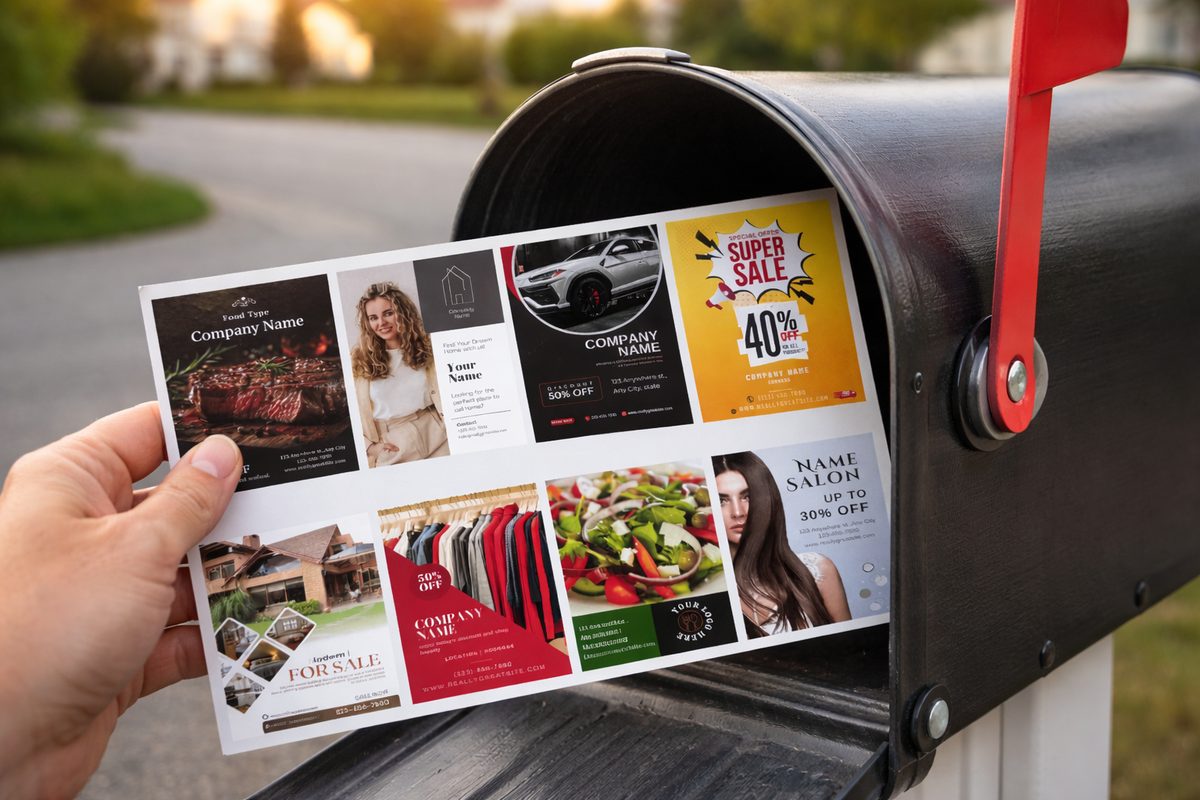
This is what lands in 5,000 mailboxes. Somebody in the house needs one of them.
Pillar Three · The Church Hub
Most church software treats a church like a database — names, dollars, attendance reports. That works fine for the back office, but members never log in unless they have to. Nobody opens a membership record to check on a friend.
So the church ends up split three ways, with the most important part left homeless:
We built the missing piece: a hub your church owns, where the part that actually matters — people showing up for each other — finally has a home.
Some of it stays inside. Some of it walks out the front door. The prayer wall is members only — for dignity, not for status. Nobody wants their hardest week posted where the whole internet can read it. But knowing each other isn't the destination; it's how a congregation gets strong enough to be useful to its town. So the outward half is open to anyone, and asks nobody to join anything first.
That second column is the part no church software does. A membership database can tell you who attends. It cannot help twelve people decide to go to a baseball game on Friday, or turn a Saturday morning into a garage sale the whole street shows up for. Those are the moments a church is actually known by the community it serves — and they need somewhere to be organized.
Members bring the ideas. Your staff keeps the keys. Anyone in the congregation can submit an event or a post, so the work doesn’t all land on the office. Nothing appears until someone on staff approves it. You get a church full of contributors without handing over the microphone.
Built for Wednesday afternoon, not just Sunday morning.
One optional feature, entirely the church's call. Every Hub has a Trades list — local people the congregation trusts. Any member can add their own business to it free, because they belong to the church. A church can also choose to include businesses from our neighborhood mailer, and those are labeled Sponsored every time. Members are never the paid listings, and the whole feature stays off unless the church turns it on.
Talk to us about the Hub →One minute on what the Hub replaces — and what it makes possible.
$149 / month
One price for your whole congregation. No per-member counting, no setup fee.
Who it's for
Every trade below is a separate spot. Take yours and no competitor sits beside you on that edition — until it ends, and someone else can.
 OpenPlumbing
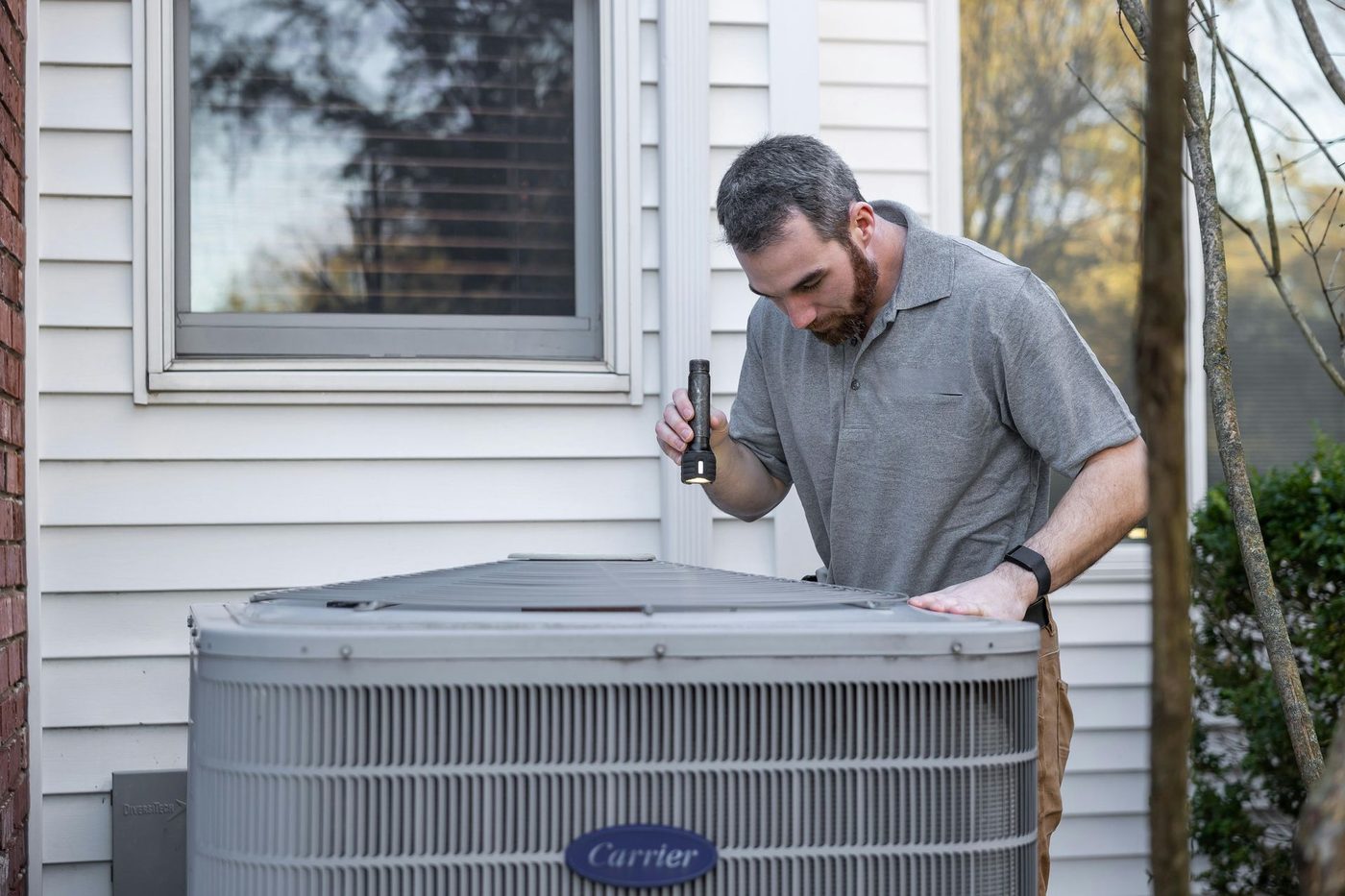 OpenHVAC & Air
 OpenAuto Repair
 OpenDental
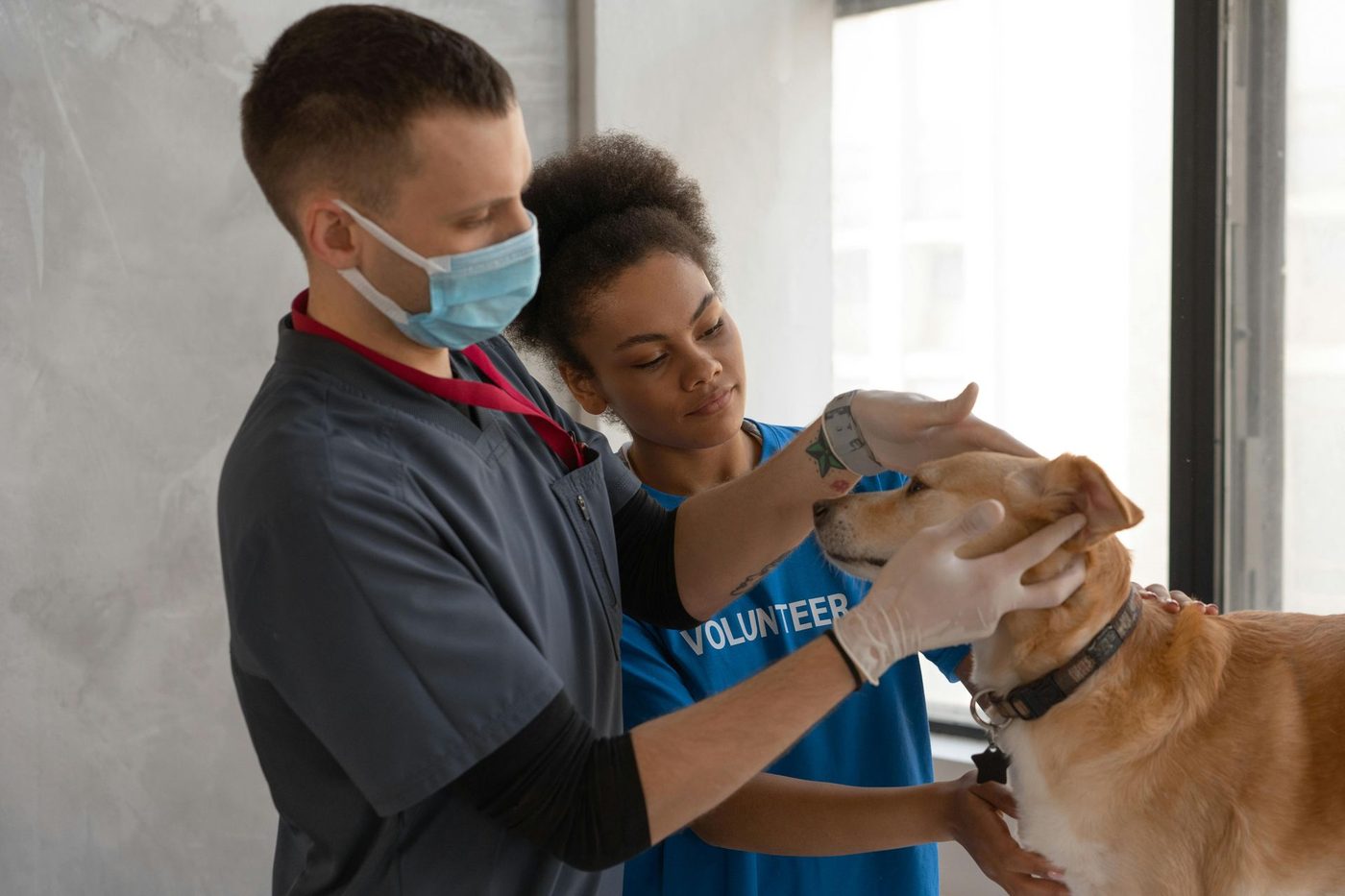 OpenVeterinary
 OpenHome Healthcare
 OpenCoffee & Cafés
 OpenRestaurants
 OpenTakeout & Delivery
 OpenFlorists
Don’t see your trade? We build the card around whoever’s in the neighborhood. Ask what’s open →
Why this works
Not on quality. On whether you feel like a safe choice. Everything we sell is a way of winning that moment.
Customers aren't judging your workmanship in that first moment — they're judging whether you look established. Excellent businesses lose to average ones that simply look more certain.
Recognition lowers perceived risk. Seeing your name on the neighborhood site, then again on the card in the mailbox, then again at a community event, is what turns a stranger into a safe bet.
Google looks for patterns the same way people do. Matching details, current photos and steady activity tell both of them that you can be relied on to show up.
How we work
You can't jump in and start baking. You need to know what kind of cake, whether you have the ingredients, and whether there's a profit in selling it. We work the same way — understand where the business actually stands before anyone spends a dollar.
We hold one business per category on each card. First call tells you whether yours is still open.
We map your position against your goals and the competitors already taking your calls.
Neighborhood site, a spot on the next edition, monthly management — or all three.
Trackable response and monthly reporting, so progress is visible rather than promised.
Pricing
Everything a local business needs to be the name its neighborhood knows, at one monthly price. No tiers to compare — just one optional extra if you want it.
Shared Direct Mail + Neighborhood
$650 / month
≈ 13¢ per doorOptional add-on: +$49/month adds you to every participating Church Hub in your service area.
Check if your category is open →Billed monthly. Stop any time. Churches: Church Hub pricing is here →
News & Media
Notes on recognition, trust and the small signals that decide who gets the call.
The businesses shown at the top of local results take most of the calls — often before a website is ever opened.
Read the piece →
A business doesn't have to be the best to feel safe. It just has to feel known — which is why excellent newcomers lose to average incumbents.
Read the piece →
Most churches don't have a technology problem. They have a scattering problem — and the cost isn't inefficiency, it's the people who quietly fall through it.
Read the piece →
FAQ
One 9×12 postcard carries up to 15 businesses, each with its own spot. The full print and postage cost is split across those advertisers, so instead of paying thousands for a solo mailer to 5,000 homes, your share is $650 a month — roughly thirteen cents per household reached.
Cost is the obvious reason, but retention is the better one. A solo mailer is relevant to one need — if the household doesn't need what you sell this week, it's thrown out. A card with fifteen local businesses is relevant to somebody in that house almost every time, so it gets kept and put on the refrigerator. While it hangs there, every business on it keeps getting seen.
Every spot can carry its own tracking — a special offer only available on the card, a dedicated phone number, a QR code, or a landing page built for that campaign. When a lead comes in, you can see which one it came from. That's the difference between advertising you can explain and advertising you hope about.
One card produces response. Consistent mailing produces more, because repetition creates familiarity and people trust what they recognize. The businesses that do best treat it as a standing presence in the neighborhood rather than a one-off.
Not on your card. We hold one business per category on each edition — take the plumbing spot and you're the only plumber on it. The neighborhood websites work differently: they aren't category-exclusive, so a plumber from another edition may also appear there. That's deliberate. Residents trust the site because it serves them, and a community page that offers exactly one option in every trade stops being useful.
Neighborhood news and blog posts, a local events calendar, school updates, homes for sale, HOA and MUD information, trash and recycling schedules, emergency contacts, a new-resident guide, community giving, and a resident submission form. These are independently operated community resources — not official HOA sites — which is why residents use them freely.
The ones you actually service. Stonecreek Estates in Richmond/Rosenberg is live now, and more are being built toward 15 sites per ZIP code across 77469, 77406 and 77407. You tell us your service area and we place you on those sites as they launch — no paying to be seen by households on the far side of the county. If there's a neighborhood you want covered, tell us; early advertisers help set the build order.
Only if the church says yes. The Local Business Spotlight is an optional feature each church chooses whether to enable, and the church decides which businesses appear. For advertisers it's $49 a month added to your package, which places you in every participating Hub across your service area rather than picking them one at a time. When it's on, you're seen by members already asking each other for recommendations — about as warm as local visibility gets.
Your spot on the 9×12 card mailed to 5,000 households, a front-page Local Business Spotlight on your neighborhood websites, a written article published about your business, inclusion in the weekly neighborhood electronic newsletters, and a listing in the business directory. One price, one invoice — the only add-on is the Church Hub option.
Call or send us a note and we'll tell you the same day. Each card holds one business per category, so once a trade is taken on an edition it's closed until that edition ends — which is why it's worth asking sooner rather than later.
Any local business that serves the households around it — trades, clinics, restaurants, salons, contractors, shops. Whether you're a coffee shop or a dental practice, the principles of recognition and trust work the same way. We hold one business per category on each card, so it's worth asking early whether yours is open.
They can submit it; your staff decides whether it goes up. Members create events, requests and posts, and someone on your team approves before anything is visible. It keeps the Hub active without putting your church’s name behind something nobody vetted.
No. Each church gets its own Hub, with its own members, its own content and its own settings. What happens in yours stays in yours.
Churches of any size whose members are already connecting — just scattered across group texts, Facebook and email where things get missed. Some of it is private to your congregation, like the prayer wall. Some of it is meant to reach the neighborhood, like a community garage sale or a service project. The Hub handles both, and sits alongside your public website and your admin software rather than replacing either.
Because we're local, we're experienced, and we work with full transparency. We're not selling attention — we're building the recognition that makes people choose you without hesitating. You'll always be able to see what changed and why.
Get started
Each card holds one business per category. Tell us your trade and your service area and we'll tell you what's still open — same day, no obligation.
We’ll be in touch within 24 hours and let you know whether your category is still open. Check your inbox for a confirmation.
Need an answer sooner? Call 281-942-7300.