
Customers don't need a bad experience to lose confidence in a brand. Most of the time, doubt shows up long before a call is made or a form is filled out. It happens quietly, in seconds, when something doesn't line up. A business might look fine at first glance, but small inconsistencies create friction that customers instinctively avoid.
When someone searches for a service, they expect clarity. They want the business name, reviews, photos, and information to match wherever they encounter it. When those elements feel scattered or contradictory, it triggers uncertainty. Customers may not be able to explain what feels wrong, but they feel it immediately. And when doubt enters the decision, the safest move is to keep scrolling.
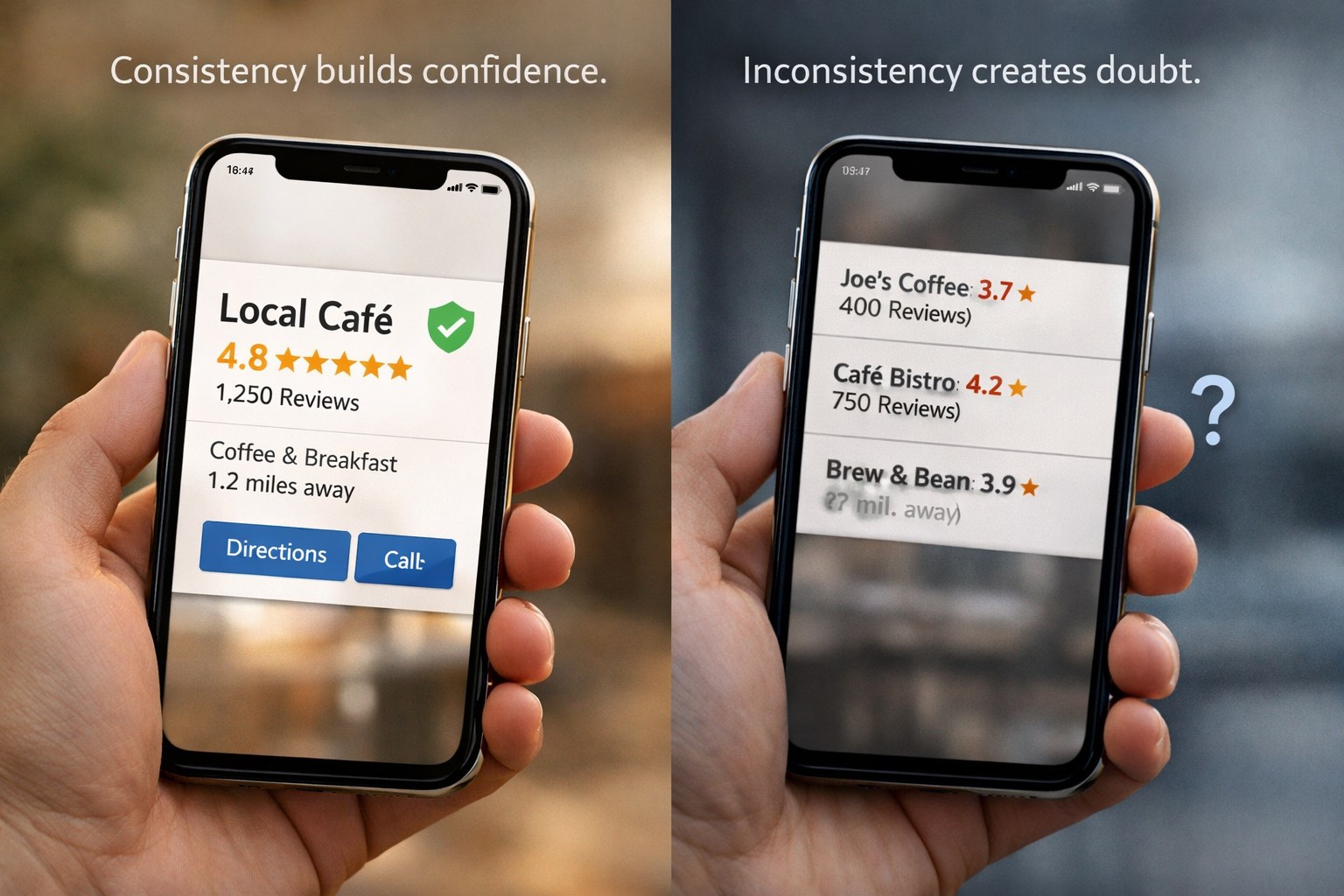
Inconsistency shows up in subtle ways. A business name that changes slightly across platforms, outdated photos mixed with new ones, reviews that feel disconnected from the brand tone, or profiles that look active in one place and abandoned in another. None of these issues are dramatic on their own, but together they create hesitation. Hesitation is enough to lose the call.
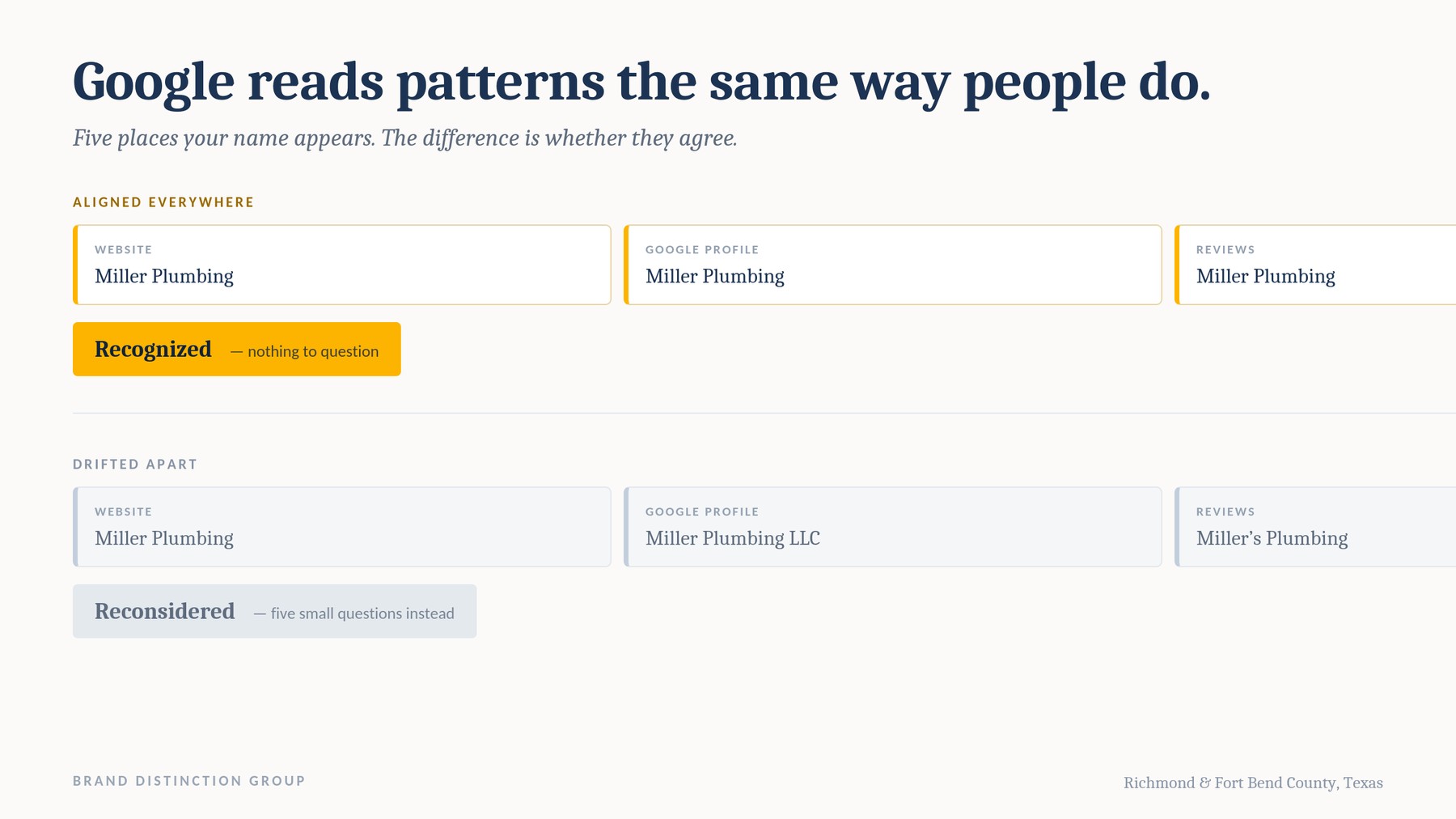
This reaction isn't emotional weakness—it's pattern recognition. People are wired to look for stability when making decisions. Brands that appear consistent feel predictable. Predictability feels safe. Brands that feel uneven create questions customers don't want to answer. Is this business reliable? Is the information accurate? Will the experience match what I'm seeing?
Google mirrors this behavior. Inconsistency makes it harder for Google to understand and trust a business. Conflicting signals across listings, reviews, and content create uncertainty for the algorithm just as they do for customers. Over time, that uncertainty can affect visibility, engagement, and ranking—especially within your Google Business Profile.
This is where familiar brands gain an advantage. Familiarity doesn't come from being everywhere—it comes from being the same everywhere. When customers repeatedly see the same name, tone, and level of professionalism, recognition builds. Recognition reduces effort. The decision feels easier because nothing needs to be questioned.
Inconsistent brands force customers to think harder. Thinking harder feels like work. Work feels risky. So customers choose the brand that feels simpler, clearer, and more established—even if the service itself isn't objectively better. Consistency removes friction before it ever becomes a problem.
The irony is that inconsistency is rarely intentional. It usually comes from neglect, delegation without oversight, or treating platforms as separate tasks instead of parts of a single brand system. Over time, those gaps add up. The brand starts to feel unreliable, even when the business itself is solid.
Trust isn't built through perfection. It's built through alignment. When information, visuals, tone, and activity stay consistent, customers feel grounded. They don't need to analyze or compare as much. They just choose. That ease is the real advantage consistent brands create.
In a crowded market, clarity wins. Businesses that understand this don't chase attention—they protect alignment. They recognize that every inconsistency introduces doubt, and every moment of doubt is an opportunity lost.