
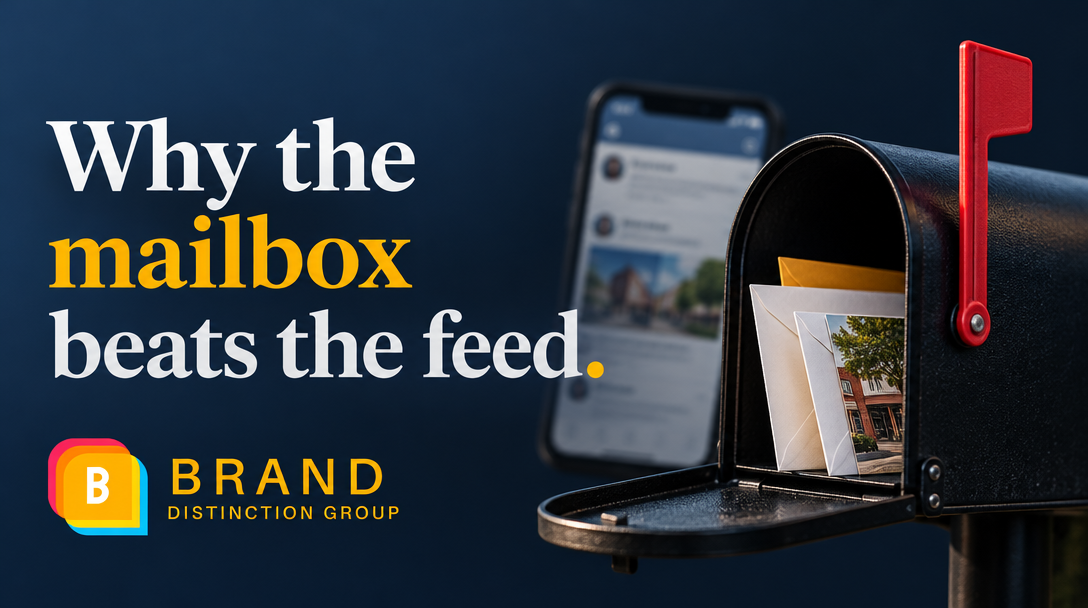
You have spent money on advertising before. Maybe a lot of it. And at the end of the month what came back was a report full of impressions, reach and engagement — and no answer to the only question that matters.
Did that work, or did I just light money on fire?
That isn’t a failure of effort. It is what happens when you buy something that cannot be measured with any real confidence. If you can’t say “I spent this and got back that,” you aren’t marketing. You’re guessing — and unpredictable advertising is the most expensive kind there is.
Social media sells you reach you don’t own
Here is the part that never makes it onto the invoice: on social, you aren’t building an audience. You’re renting access to one.
The platform decides who sees what. It can change the rules on a Tuesday afternoon and your reach changes with them. It can decide your post is perfectly fine and still show it to a small slice of the people who chose to follow you. And the thing you are really buying — attention — is the same scarce commodity every other advertiser is bidding on in the same second.
A feed ad gets about the length of a thumb-flick to make its case. It can be skipped before it finishes loading. It can be blocked outright. And it leaves no trace in the house.
None of that makes social useless. It makes it a bad place to be the only name a neighborhood knows.
A mailbox is not an algorithm
Direct mail doesn’t have those weaknesses.
- It reaches real homes. Not accounts, not profiles — addresses, with people behind the door.
- It can’t be skipped or blocked. There is no ad blocker for a mailbox.
- It stays for days, not seconds. A card sits on the counter, moves to the refrigerator, and keeps working every morning for weeks without you paying for it again.
That last point is the one that decides everything, and it is worth understanding properly: a solo postcard is relevant to one household need and goes in the bin when that need isn’t live this week. A card carrying up to fifteen local trades is relevant to somebody in the house almost every time it lands, so it gets kept rather than binned — and once it’s kept, every business on it is seen again daily, for free. We wrote about that in full in why your mailer ends up on the refrigerator.
What it costs, and how you know it worked
One spot on the shared card runs $650 a month. Split across the businesses on that edition it lands at roughly 13¢ per door to reach 5,000 households in ZIP codes 77469, 77406 and 77407.
Every spot carries its own way of proving itself: a special offer, a dedicated phone number, a QR code, or a landing page. Not a vibe — a count. You find out what people responded to and where the leads came from, which makes the next edition smarter instead of another guess.
There is a second thing that comes with the spot at no extra cost. Your business appears on your neighborhood’s own community site — school news from Lamar CISD, events, HOA and MUD information, trash and recycling schedules, homes for sale. You get the front-page Local Business Spotlight, a written article published about your business, and a place in the weekly neighborhood newsletter. The card is the moment; the site and the article are the memory, working the other fifty-one weeks.
One business per category, per card. No competitor sitting beside you.
Where social still earns its place
We are not telling you to quit social. A business with no presence anywhere looks like a business with something to hide, and people do check.
But social is where people confirm what they have already heard. It is a credibility layer, not the customer-acquisition engine for a plumber in Rosenberg or a dentist in Richmond. Order matters: be known in the neighborhood first, then let social validate it.
The local businesses that win aren’t the ones with the cleverest content. They are the ones whose name shows up often enough, in enough places their neighbors already trust, that choosing them feels like the safe call. Customers decide in about five seconds, and they don’t decide on workmanship they can’t see yet. They decide on whether you feel established — which is why familiar brands feel safer even when they aren't better.
What to do with this
If you are spending on advertising you can’t measure, the fix isn’t a bigger budget. It is a channel that tells you what came back.
One card. One category. 5,000 households. Trackable from the first edition.
Questions people ask
Is direct mail still worth it when everyone is online?
Being online and being found are different things. A feed ad is gone in a second and leaves nothing in the house. A card that gets kept on the refrigerator is seen every day for months, which is what builds the recognition that makes someone call you instead of the next name down.
How is a shared card cheaper than mailing my own?
Print and postage are the same whether the card carries one business or fifteen. Splitting those costs across the businesses on the card brings one spot to about 13¢ per door for 5,000 households — a number almost no small business can reach mailing alone.
How do I know whether the mailer actually worked?
Every spot carries its own tracking: an offer code, a dedicated phone number, a QR code, or a landing page. You get a count of what came back rather than an impressions report, and that count tells you what to change on the next edition.
Will a competitor be on the same card as me?
No. We hold one business per category on each card, so you are the only plumber, the only dentist, the only roofer on that edition.
Which areas do you mail into?
Targeted neighborhoods across Richmond, Rosenberg, Sugar Land, Katy, Fulshear and the rest of Fort Bend County. Each edition is built around a set of neighborhoods rather than a whole zip code, so the businesses on it are genuinely local to the people receiving it.