Google Business Profile vs. Your Website: Which One Actually Brings Customers?
The different roles your website and Google Business Profile play in local growth
Most local business owners assume their website is doing the heavy lifting when it comes to bringing in customers. After all, it’s where the branding lives, where services are explained, and where the contact form sits patiently waiting to be filled out. It feels logical to believe that the website is the engine behind growth. In reality, for most local businesses, the website rarely creates demand. It supports demand that already exists.
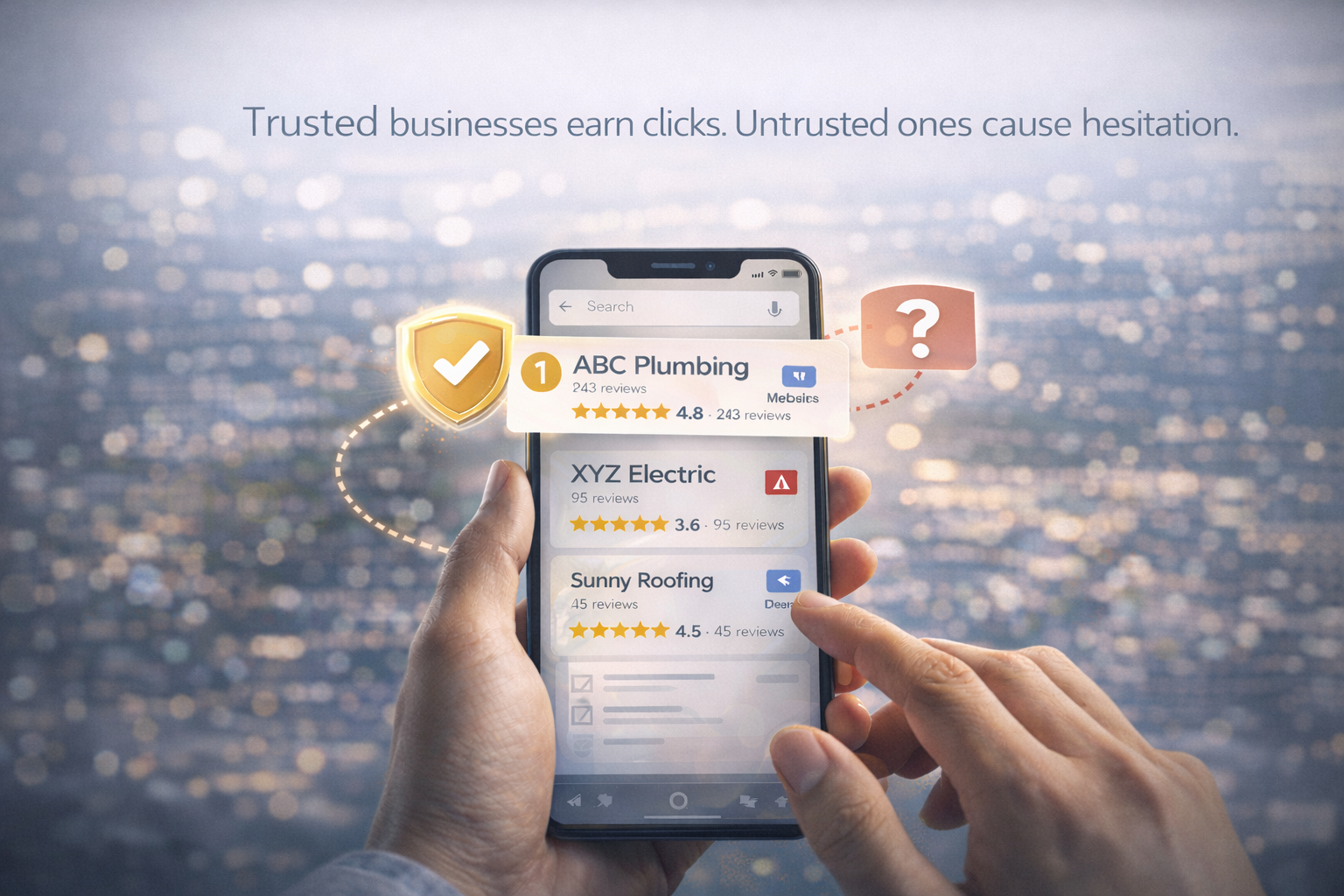
That demand usually starts somewhere else—inside your Google Business Profile. When customers need a local service, they don’t begin by browsing websites. They open Google, type a quick search, glance at the map results, and make a decision faster than most business owners realize. By the time a website is clicked, trust has already started forming or has already been lost.
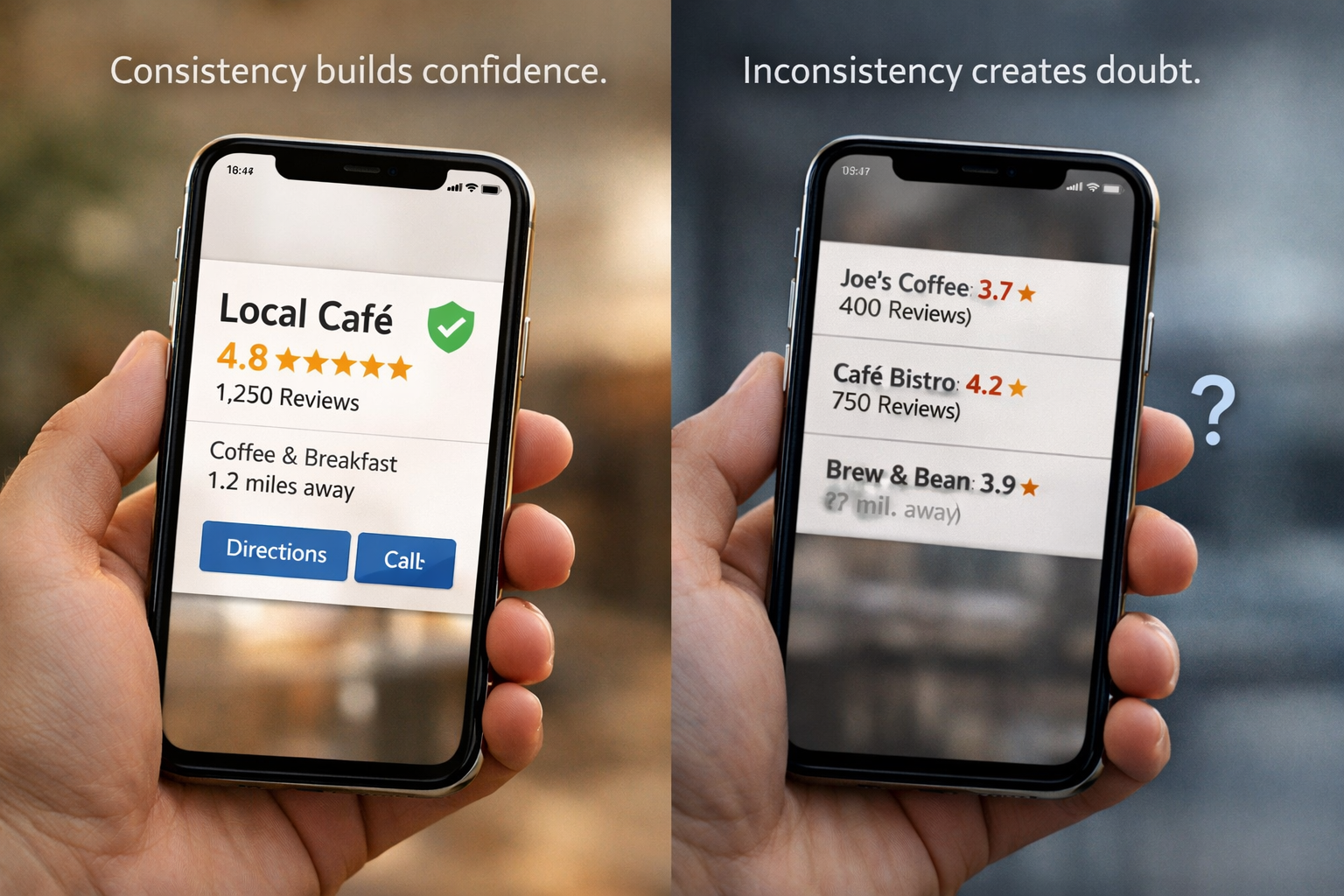
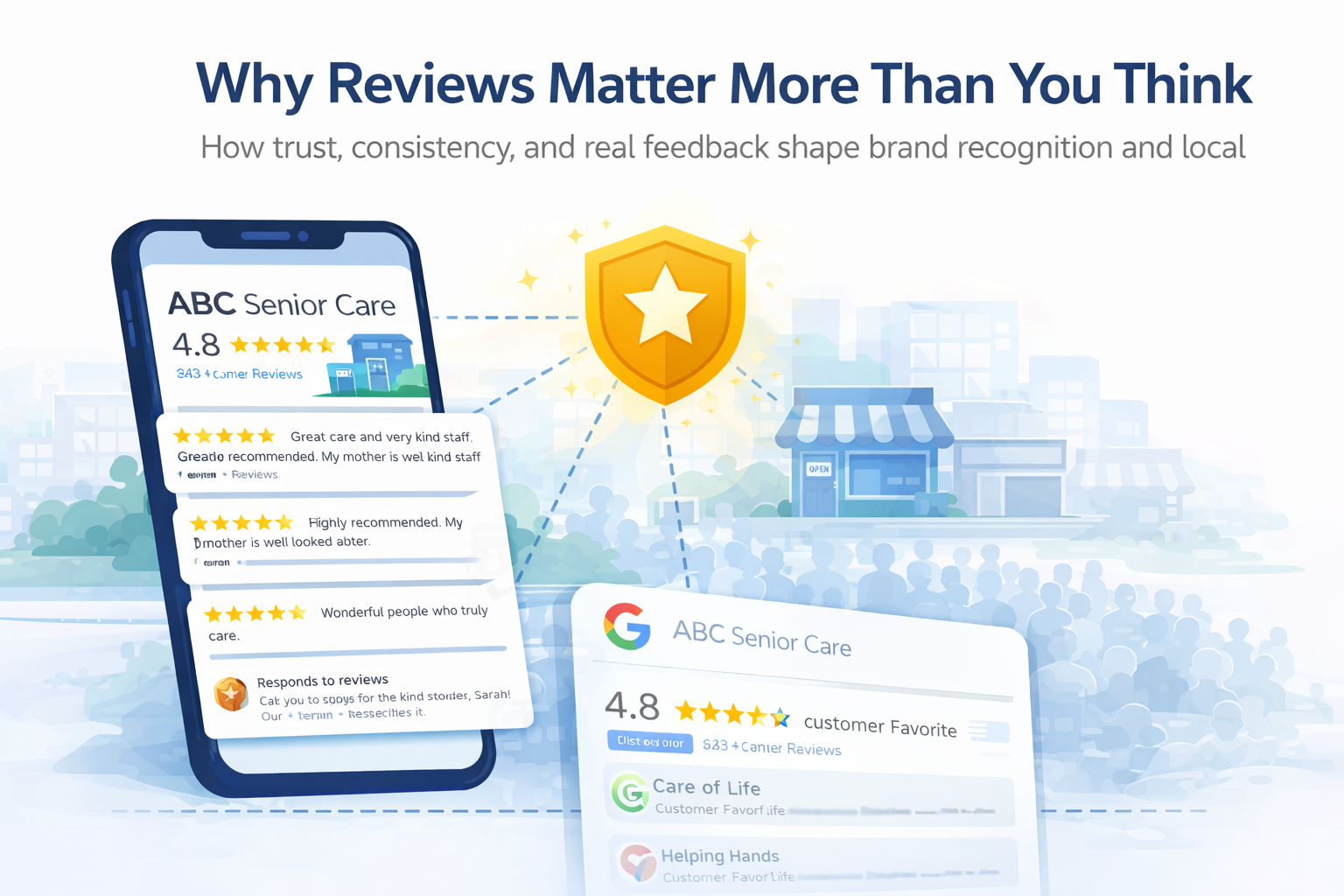
At this early stage, customers aren’t comparing brand stories or reading mission statements. They are scanning for proximity, legitimacy, and reassurance that others have had a good experience. Reviews, photos, activity, and accuracy all shape that split-second judgment. Google Business Profile answers those questions immediately, often without requiring the customer to click anywhere at all.
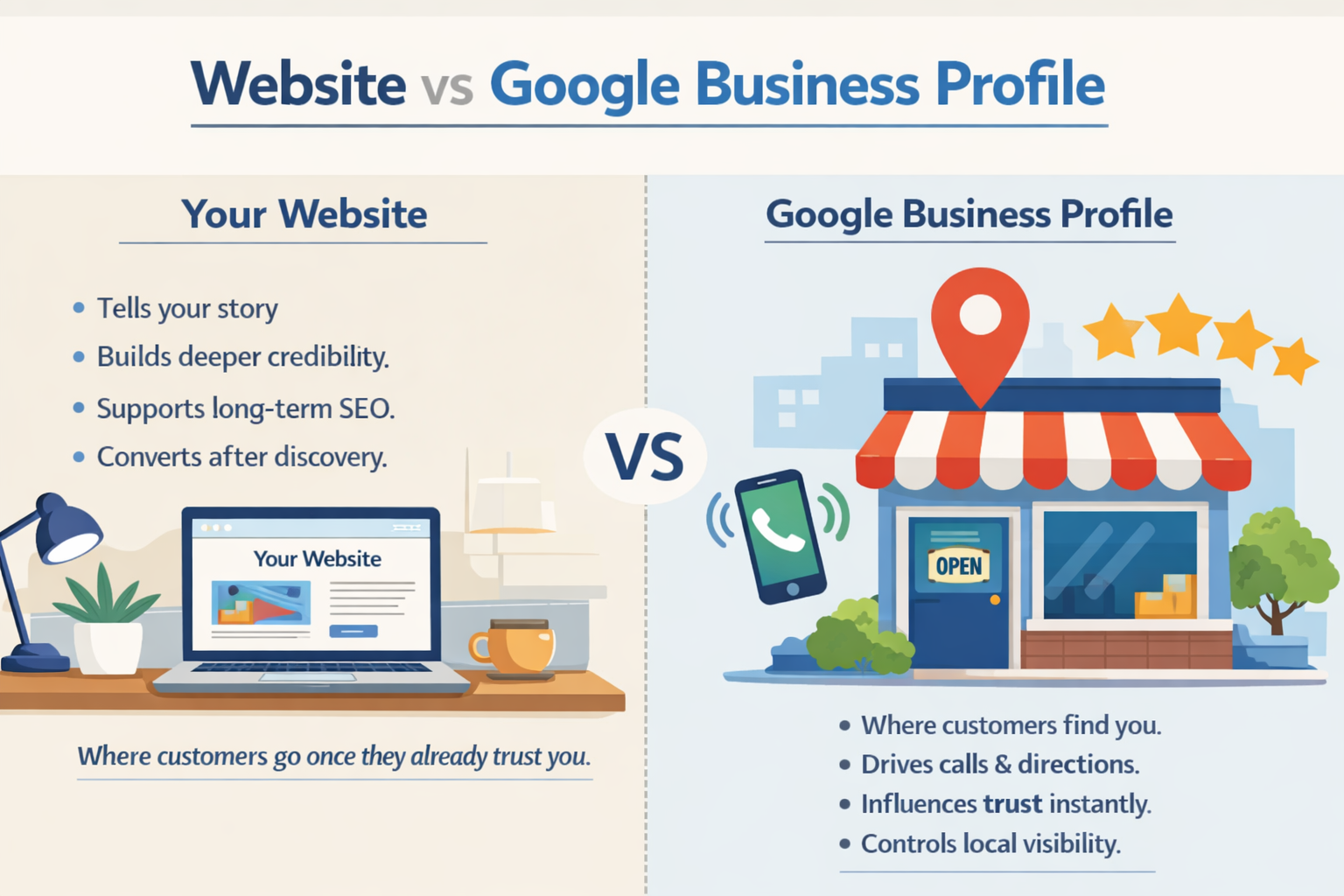
This doesn’t mean your website isn’t important. It simply plays a different role. A website excels at building confidence once interest already exists. It tells your story in your own words, explains services in detail, supports long-term SEO efforts, and reassures customers that they are making a smart decision. The website confirms what the Google Business Profile initiated.
Google Business Profile, however, operates earlier in the decision-making process. It places your business in front of high-intent searches, displays trust signals instantly, and removes friction from the path to action. Customers can call, get directions, or message you directly from the listing. This immediacy is why so many local businesses receive calls without the customer ever visiting their website.
Problems arise when businesses treat these two assets as competitors instead of partners. Some invest heavily in a website while neglecting Google Business Profile, assuming the site alone will drive traffic. Others focus on Google visibility but fail to support it with a credible website. In both cases, growth stalls. One creates opportunity, the other closes the deal, and separating them weakens both.
When the two work together, the customer journey becomes simple. Google Business Profile creates visibility and initial trust, then guides the customer to your website or directly to contact. The website reinforces credibility and turns that interest into action. Google understands your business more clearly, customers feel more confident, and decisions become easier.
This matters more now than ever. Local markets are crowded, competition is louder, and attention spans are shorter. Businesses that stand out aren’t necessarily the flashiest. They are the clearest. They show up where customers are already looking, appear trustworthy at a glance, and make the next step obvious.
The real question isn’t whether your website or your Google Business Profile is more important. The real question is whether they are working together to bring you customers. When they are aligned, marketing becomes more predictable and less stressful. And for most business owners, predictability is the growth they’ve been looking for all along.